

Blockchain press release distribution: how it works and costs
Blockchain press release distribution explained: wire syndication vs tier-one placements, pricing tiers, and what actually gets read.
- press release distribution
- crypto pr
- token launch pr
- web3 marketing
- crypto news outlets
Quick answer Blockchain press release distribution is the process of writing an announcement about a crypto or web3 project and placing it across crypto-native news outlets and, at higher tiers, mainstream business and tech outlets. It works through wire services and PR agencies that hold direct or syndicated relationships with those outlets, and pricing usually scales with outlet tier: basic wire packages start cheap and wide, premium placements on named tier-one outlets cost more and carry more weight with investors and exchanges.
Every project doing a token launch, exchange listing, or funding round eventually asks the same question: where does the press release actually go, and does anyone real read it. The honest answer is that most distribution is templated. The outlet list matters more than the word count.
What does "distribution" actually mean here?
A blockchain press release isn't useful sitting on your own site. Distribution is the act of getting that release published as a live, indexable article on third-party outlets, ideally ones a token holder, journalist, or exchange listings team would recognize. There are two layers most projects end up buying:
- Wire-style syndication: a release goes out to a bundle of crypto news sites at once, often 15-20+ outlets in one package. Good for baseline coverage and SEO backlinks.
- Named tier-one placement: the release (or a bylined version of it) runs on a specific outlet with an existing readership and reputation, sold individually because the placement itself is the value.
Most credible campaigns use both: a wide syndication pass for coverage volume, plus one or two tier-one placements for credibility that gets cited in decks, listing applications, and follow-up press.
How much does blockchain press release distribution cost?
Pricing is tiered almost everywhere in this space, and for good reason: a basic wire blast and a named tier-one placement are not the same product. Expect roughly this shape:
- Basic: a single release pushed through a syndication network, minimal editorial oversight, cheapest tier.
- Standard: broader outlet reach, sometimes includes a few recognizable crypto trade publications, faster turnaround.
- Premium: named tier-one placements, often including outlets outside crypto media entirely, higher cost because it's individually placed rather than templated.
Exact numbers depend on which outlets are in scope that month, since tier-one media relationships shift. EAC quotes press packages, including a coordinated 17-outlet article package and individual tier-one placements, on request rather than publishing a flat rate that goes stale. Details are on the services page.
What should actually be in the release?
Outlets reject or bury releases that read like marketing copy. A release that gets picked up cleanly usually has:
- A headline stating the news, not the hype (a listing, a raise, a mainnet date, a partnership) in plain language.
- A lead paragraph that answers what happened, who's involved, and when, before any adjectives show up.
- A quote from a named founder or team member, not an anonymous "spokesperson."
- Concrete details: token ticker, chain, amount raised, exchange name, contract address if relevant.
- A boilerplate paragraph about the project at the bottom, kept factual.
Skip the superlatives. "Revolutionary," "game-changing," and "next-generation" get a release flagged by editorial filters at serious outlets before a human even reads it.
Does a press release move price or get exchange attention?
A press release alone rarely moves a chart. What it does is create a paper trail: a live, dated, third-party URL that says this project did the thing it claims to have done. Exchanges, market makers, and larger media all check for that trail before they engage further. A project with zero press coverage looks unverified even if the product is real. A project with tier-one coverage and a track record of live links looks like it has done this before.
That's also why every placement should come back as a URL you can actually check, not a screenshot or a promise. If a vendor can't hand you a live link after publication, that's the tell something didn't run where they said it did.
Wide syndication, low cost, good for backlink volume and baseline "we announced this" coverage.
Coordinated push across a set of recognizable crypto outlets in one campaign, useful for launch weeks.
A single named outlet, priced individually, used when credibility with investors or exchanges matters more than volume.
How does this fit with the rest of a launch campaign?
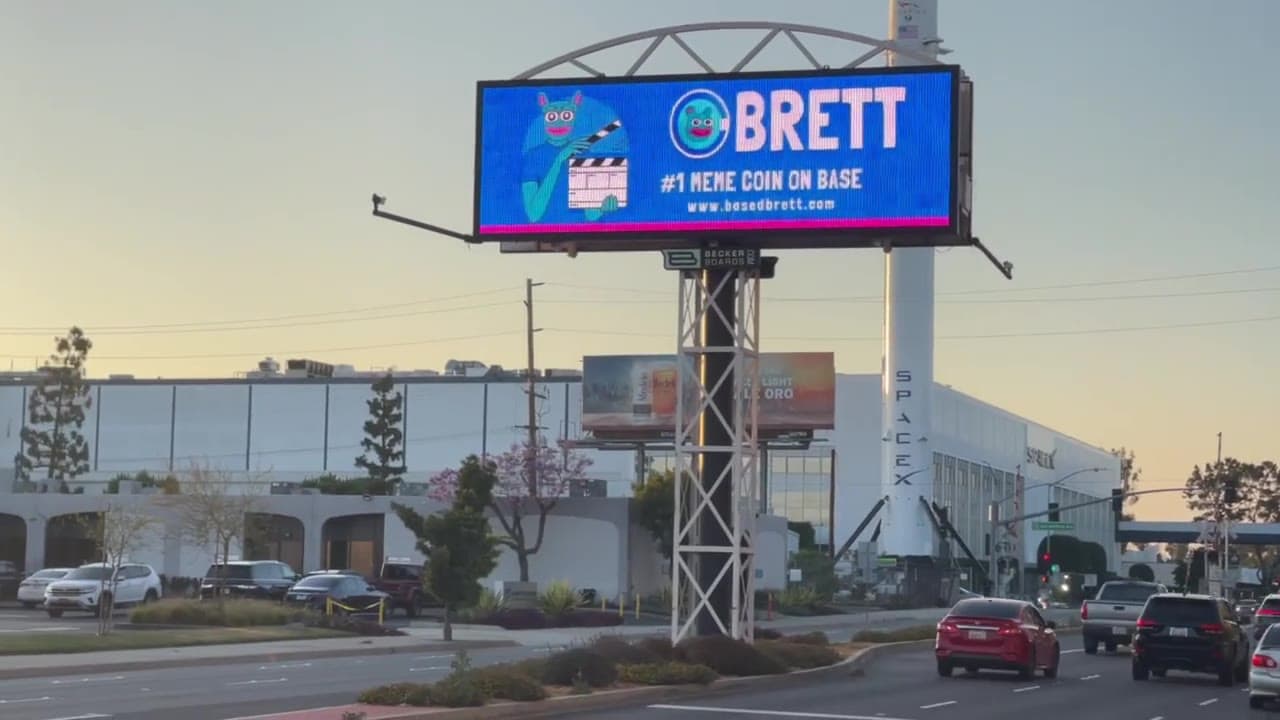
Press rarely works alone. A release with no other visibility around it reads as noise; a release paired with real proof of activity reads as a project that's actually moving. EAC runs press as one lane inside broader campaigns that also cover KOL pushes, Asia-market reach, and physical out-of-home. A Times Square billboard run, a Dubai wrapped Lambo, or an aerial banner flight over a metro doesn't replace press coverage, but it gives a project time-stamped footage to put next to the live press links, which is the kind of proof a founder can screenshot and hand to an investor without inflating anything. See the billboards showcase for what that looks like in practice, and the full lane breakdown on services.
How do you pick outlets that actually matter?
Outlet count is a vanity metric if none of the outlets are read by anyone your project cares about. Before buying a package, ask what specifically is included:
- Are outlet names disclosed before you pay, or only after?
- Is at least one placement on an outlet outside the crypto bubble (general business or tech press), which matters more for exchange listing applications and institutional conversations?
- Does the vendor return live URLs after publication, not just a report saying it went out?
- Is there a real person you can reach mid-campaign if a placement is delayed or dropped?
Booking through a Telegram conversation with an actual operator, rather than a ticket queue, tends to surface these answers faster than a sales call.
When should a project run a press release?
The releases that land hardest are tied to a real, checkable event: a token generation event, an exchange listing, a funding close, a mainnet launch, a major partnership, or a security audit completion. Releases with no news attached, sent purely to "stay visible," get ignored by editors and read as filler by everyone else. If there's nothing concrete to announce this week, it's usually better to wait than to burn a press slot on a non-event.
Free proposal or wire self-serve: which is worth it?
Self-serve wire tools are fine for a basic compliance-style announcement nobody needs to notice, like a routine team update. For anything tied to token price, a raise, or an exchange listing, having a person who can get you into a specific named outlet, not just a syndication list, is worth the extra cost. That's the gap between a wire tool and an agency: a wire tool sells you access to a list, an agency sells you a relationship with an editor.
What is blockchain press release distribution?
It's the process of writing a news announcement about a crypto or web3 project and placing it on third-party news outlets so it appears as a live, indexable article rather than just a post on the project's own channels. It typically runs through a wire syndication network, a PR agency with direct outlet relationships, or both.
How much does a crypto press release cost?
It depends on tier. Basic syndication packages are the cheapest, standard packages add broader crypto trade outlet reach, and premium named tier-one placements cost the most because they're placed individually rather than templated. EAC quotes press packages, including a 17-outlet coordinated package and individual tier-one placements, on request through services.
Does a press release actually help with an exchange listing?
It won't get a listing approved on its own, but most exchange listing teams check for public press coverage as part of due diligence. A project with live, verifiable press links looks more established than one with none, and tier-one placements carry more weight than wire-only syndication in that review.
How do I know a press release actually got published?
Ask for the live URL after the campaign runs, not a screenshot or a status report. A legitimate distribution service returns a link you can open, search-index, and share. If a vendor can't produce a live link for every outlet claimed, treat that as a red flag before paying for the next round.
Ready to put this into a campaign?
Explore the services, the billboards showcase, and the surfaces we operate across — then book on Telegram. Confidential. NDA available on request.