

Crypto influencer marketing: how it works and what it costs
Crypto influencer marketing explained: how KOL vetting, pricing, and campaign fit work for a real token launch.
- crypto influencer marketing
- kol campaigns
- crypto twitter
- web3 marketing
- token launch
Quick answer Crypto influencer marketing pairs a project with crypto-Twitter (CT) KOLs, YouTube researchers, and regional creators (Chinese, Korean, Southeast Asian) who already hold the audience you want. Done right it means vetted creators matched to your project, clear deliverables, and disclosure that keeps the campaign compliant. EAC runs KOL campaigns directly, matches creators to the project instead of blasting a spreadsheet, and pairs influencer reach with press and out-of-home so the campaign shows up in more than one feed.
Every crypto project gets pitched the same thing: a database of "3000+ vetted KOLs" and a form to fill out. Few of those agencies tell you which creators actually move a token, which ones are running bot-farmed engagement, or how a KOL post should fit next to your press and your paid placements. This page covers what crypto influencer marketing actually is, how it's priced, how to vet a creator, and where it fits inside a full launch.
What is crypto influencer marketing?
Crypto influencer marketing is paying or partnering with creators who have built trust with a crypto-native audience, then having them talk about your project on their channel. That channel is usually crypto-Twitter (CT), but it also includes YouTube, Telegram groups, Discord servers, and, for Asia-facing projects, WeChat and Xiaohongshu (Little Red Book).
The mechanism is simple: a founder or marketing team can post about their own token all day and get ignored, because the audience knows it's self-promotion. A KOL with a following built over years has already earned attention. Their post is read as a signal, not an ad, even when it's disclosed as one. That's the entire value of the channel, and it's also why picking the wrong creator does real damage: a bad match reads as paid, forced, and gets called out in the replies.
How much does crypto influencer marketing cost?
Pricing is quote-based across the industry, and honestly it should stay that way, because a single tweet from a mid-tier CT account and a multi-post campaign across ten creators with video content are not the same buy. Rates depend on:
- Follower count and, more important, engagement rate on that specific account, not just the header number.
- Format: single tweet vs. thread vs. video vs. an ongoing partnership over weeks.
- Region: Chinese-market KOLs, Korean creators, and Western CT accounts price differently and reach different audiences.
- Exclusivity: whether the creator agrees not to shill a competing token in the same window.
Anyone quoting a flat "$500 per KOL" rate across the board without asking about your token, your audience, or your region is running a volume shop, not a matched campaign. EAC quotes on request through the services page after understanding the project, not off a rate card.
How do you find and vet a real crypto KOL?
Follower count is the least useful number on a KOL's profile. Here's what actually matters:
- Engagement quality: real replies from real accounts, not a wall of generic emoji comments from bot accounts.
- Audience overlap: does this creator's audience actually trade or hold the category of asset your project is in (DeFi, gaming, RWA, memecoin), or are they a generalist account with a large but unrelated following.
- Track record: has this account shilled and vanished on past campaigns, or do they engage with the project after the initial post.
- Disclosure history: creators who consistently mark paid posts as ads or partnerships are lower-risk than accounts that blur the line, because regulators and platforms are both paying closer attention to undisclosed crypto promotion.
An agency that's actually run campaigns can tell you which accounts in a niche perform and which ones are inflated. A spreadsheet of "3000 KOLs" without that filter just moves the vetting problem onto you.
What does a KOL campaign actually look like end to end?
- Brief: what the project is, what the campaign needs to communicate (a launch, a listing, a feature, a raise), and what proof exists to back it up.
- Matching: creators selected by audience fit and category relevance, not just size.
- Content and disclosure: posts drafted or reviewed with the creator, disclosed as sponsored where required.
- Sequencing: KOL posts timed against press releases, listing announcements, or OOH activations so the campaign lands from multiple directions in the same window instead of trickling out.
- Proof: live links to every post, screenshots, and timestamps handed back so the client can verify what ran and when.
This is also where a KOL-only campaign hits its ceiling. A tweet from a well-matched creator moves a CT timeline. It does not, by itself, put a project in front of press, or in front of an audience that doesn't live on crypto-Twitter. That's why KOL work tends to perform best stacked with other surfaces rather than run alone.
A KOL post is a signal to an audience that already trusts the account. It is not a substitute for a project having something real to point to.
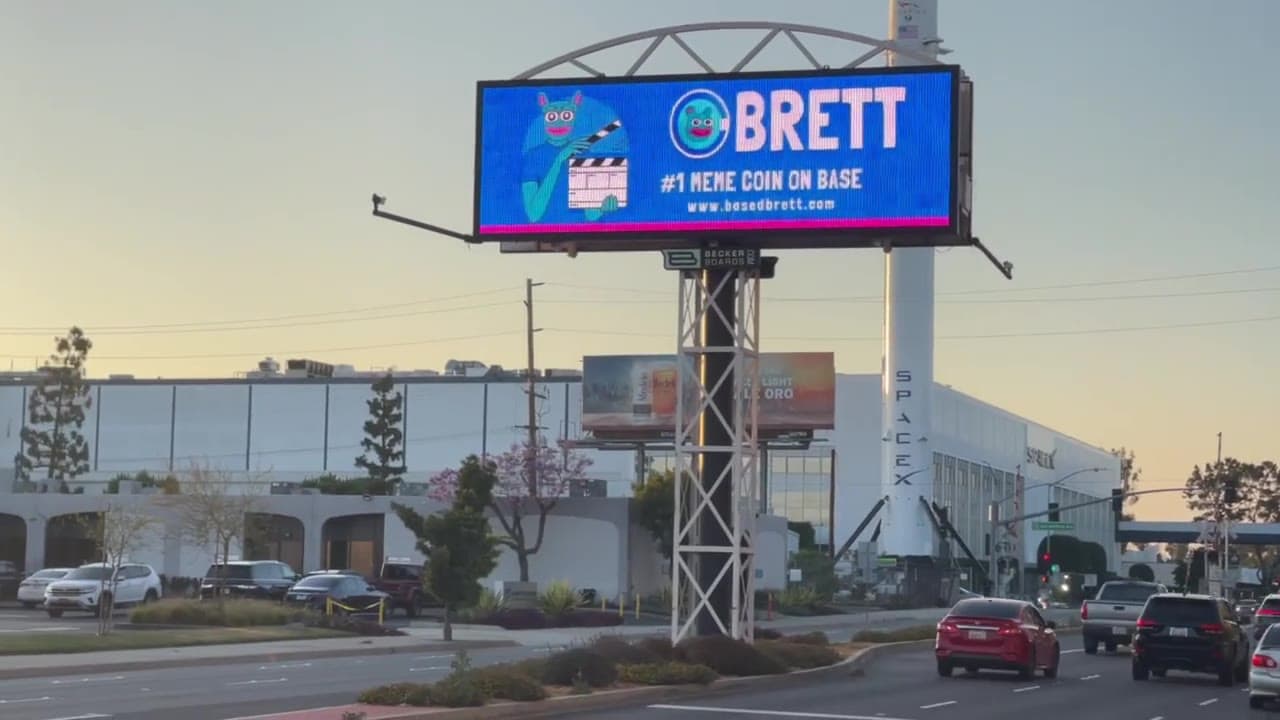
EAC has put projects in front of audiences that don't live on crypto-Twitter at all: a Times Square billboard running for a full day, a wrapped Lamborghini driven through Dubai, an aerial banner flown over a metro. Those placements come back as time-stamped footage, the same way a KOL campaign comes back as live links, so a client can screenshot and verify what actually ran. See the billboards showcase for examples, and the full services list for how KOL work fits alongside press and out-of-home in one build.
KOL marketing vs. paid ads vs. press: what's the difference?
Trust transfer from a creator's existing audience. Fast to run, works best for launches, listings, and narrative-driven pushes. Weak on its own for long-term credibility.
Placement in outlets a project can point to years later. Builds the "is this real" answer for exchanges, VCs, and due diligence. Slower to arrange, permanent once live.
Physical proof an audience outside crypto-Twitter can see and film themselves. Strong for launch moments and screenshot-able footage, weaker for explaining product depth.
None of the three replaces the others. A KOL post drives a burst of attention, press gives that attention something to check, and OOH gives it something to photograph. Run alone, each one has a ceiling.
How does Asia-market influencer marketing differ from Western CT?
Chinese-market crypto marketing runs on different platforms entirely: WeChat groups, Xiaohongshu (Little Red Book), and Chinese CT accounts that don't overlap much with English-language crypto-Twitter. A campaign built only for Western KOLs misses this audience completely, and a campaign run without native Chinese moderation tends to misfire on tone or get flagged by group admins. EAC runs CnToken and HKDefi banner placements, Chinese CT KOL posts, WeChat group pushes, and Xiaohongshu creator content with native moderation, as part of the same services lineup covering Western KOL work.
How do you avoid a fake or bot-driven KOL campaign?
Ask for a breakdown of the creator's audience before booking, not after. Look at reply quality on recent posts, not just like counts. Ask whether the agency owns the relationship with the creator directly or is subcontracting through a broker, because every layer between you and the creator is a layer where vetting gets skipped. And ask for proof after the campaign runs: live links, screenshots, timestamps. If an agency can't produce that, they didn't run what they billed for.
What to send when booking a KOL campaign
A usable brief covers: the project category (DeFi, gaming, RWA, memecoin, infrastructure), the specific moment being promoted (launch, listing, TGE, feature release), the region or regions you want reached, and any existing press or proof points the creators can reference. EAC books through Telegram, direct to an operator, not through a ticket queue or a form that sits in a shared inbox for a week.
How much does it cost to hire a crypto influencer?
It depends on the creator's engagement, format, and region, so pricing is quote-based rather than a flat rate. A single CT tweet costs far less than a multi-post campaign across several creators with video content. Get a quote based on your specific project and audience rather than trusting an average number from a database listing.
What is a KOL in crypto marketing?
KOL stands for "key opinion leader," industry shorthand for an influencer with an established, trusted following in a specific niche, most often used for crypto-Twitter accounts, YouTube crypto channels, and Chinese-market creators on WeChat or Xiaohongshu.
Is crypto influencer marketing legal or does it need disclosure?
Paid crypto promotion generally needs to be disclosed as sponsored content, and regulators in multiple jurisdictions have taken action against undisclosed crypto endorsements in the past. Work with creators who have a track record of disclosing paid posts, and make sure your campaign brief requires disclosure rather than treating it as optional.
Should a new token launch use KOLs, press, or billboards first?
They're not mutually exclusive, and running them together tends to outperform running one alone: KOL posts create a burst of attention on crypto-Twitter, press gives outside audiences something to verify, and out-of-home gives the launch a physical, screenshot-able moment. A project with a real launch date benefits from sequencing all three in the same window rather than staggering them over months.
Ready to put this into a campaign?
Explore the services, the billboards showcase, and the surfaces we operate across — then book on Telegram. Confidential. NDA available on request.