

Crypto PR firms: what they do and how to vet one
Crypto PR firms explained: press tiers, KOL and OOH add-ons, pricing, and questions to ask before you pay a deposit.
- crypto pr firms
- press release distribution
- tier-one placements
- kol marketing
- crypto marketing agency
Quick answer Crypto PR firms are agencies that get blockchain and web3 projects covered in press, place tiered releases across crypto and tier-one outlets, and often bundle in KOL, Asia-market, and out-of-home placements so a launch shows up in more than one place at once. The ones worth paying deliver live, checkable URLs and footage, not a spreadsheet of promises. EAC runs press, KOL, and OOH placements directly and hands back proof for everything it ships.
Searching "crypto pr firms" usually means one of two things: you need coverage before a token launch or exchange listing, or you got burned by an agency that took a retainer and delivered three links nobody read. This piece covers what these firms actually do, how to tell a real one from a reseller, and what to ask before you send a deposit.
What does a crypto PR firm actually do?
A crypto PR firm's core job is getting a project written about, or at minimum listed, on outlets that crypto-native readers and journalists actually check. That breaks down into a few real functions:
- Press release distribution. Writing and pushing a release through wire services and crypto news networks, usually sold in tiers (basic distribution vs. premium placement on bigger outlets).
- Tier-one placements. Getting an actual journalist at a recognized outlet to write about the project, which is harder to guarantee and usually priced separately from wire distribution.
- Coordinated multi-outlet packages. Placing the same story (or variations of it) across a set number of outlets at once, so a launch looks like a wave of coverage rather than one lonely link.
- Adjacent lanes. Most firms that survive past year one also run or broker KOL campaigns, Asia-market pushes, and sometimes physical or OOH stunts because press alone doesn't move a timeline the way founders expect.
EAC's services page breaks these out by lane instead of bundling everything into one vague "marketing package," which is worth checking against whatever proposal you're comparing it to.
How do crypto PR firms actually price this?
Press pricing is almost always quote-based because outlet mix, urgency, and exclusivity change the cost. What you should expect to see, at minimum:
- Tiered release packages (basic wire distribution up through premium placement on larger outlets)
- A named or described multi-outlet package (EAC runs a 17-outlet coordinated article package as one option)
- Tier-one placement quoted separately, since that depends on journalist relationships and story fit, not a fixed rate card
Anyone who gives you a flat number for "guaranteed tier-one coverage" before hearing your story is selling a template, not a placement. Real tier-one coverage depends on whether there's an actual story: a raise, a partnership, a technical milestone, something a reporter would write about even if you weren't paying for it.
How do you tell a real crypto PR firm from a reseller?
The crypto PR space has a reseller problem. A lot of agencies quote you a price, then buy the same wire package you could buy yourself, and mark it up. A few checks that filter for this:
- Ask for live proof, not a media kit. A firm that's actually placed coverage can hand you real URLs from past campaigns (with permission) or explain exactly what you'll get and when. If everything is "trust us," that's the tell.
- Ask who runs the placement. Direct relationships with outlets and KOL networks move faster and cost less than a firm that's forwarding your brief to a vendor list.
- Ask what happens if a placement falls through. Real operators have a plan B outlet or a swap. Resellers just refund you and shrug.
- Check whether the "package" is actually itemized. Vague line items like "brand awareness campaign" hide markup. Tiered, named packages (Basic/Standard/Premium press, a specific outlet count) are easier to verify.
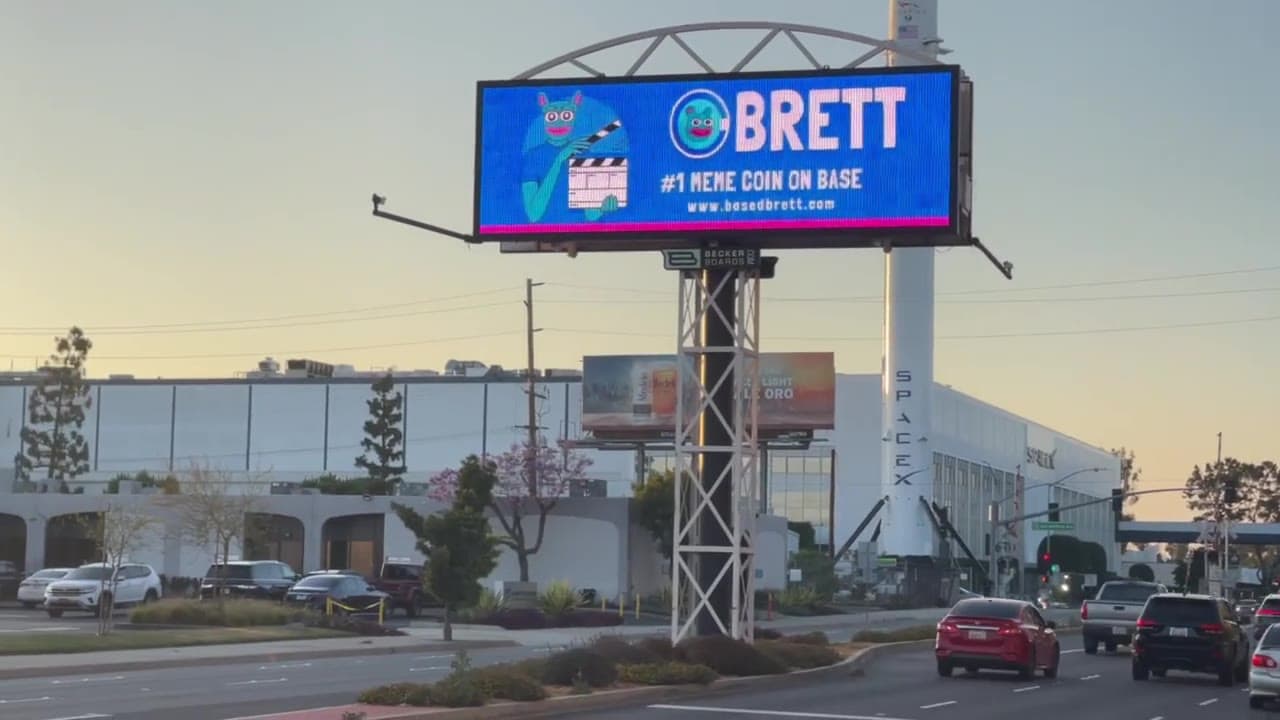
Proof matters more in this space than in most marketing categories, because crypto founders have been burned before. EAC ships press with live-link handoff, runs a Times Square billboard and LED truck campaigns, wraps a Lamborghini in Dubai for street-level activations, and flies aerial banners over Amsterdam and other metros, all returned as time-stamped footage the client can screenshot. None of that is press, but it's the same principle: if a firm can point to verifiable placements in one channel, that's a decent signal they'll deliver in another.
Do you need press, or do you need visibility?
This is the question most founders skip. Press coverage builds credibility and gives you something to cite in due diligence conversations with exchanges, VCs, or partners. It does not, on its own, move retail attention the way a billboard in Times Square or a KOL thread does. A lot of "crypto PR" pitches conflate the two.
If your goal is a specific outcome (getting listed, closing a raise, being taken seriously by a partner) press is usually the right tool. If your goal is broad launch-day noise, press works better paired with KOL activity and, for some projects, physical placements that give people something to screenshot and share. The firms worth hiring will tell you which one you actually need instead of upselling you into both by default.
What should a crypto PR proposal include?
| Item | What to look for |
|---|---|
| Outlet list | Named outlets or tiers, not "50+ major networks" with no specifics |
| Timeline | Realistic dates for draft, review, and publish, not "within 24-48 hours" for tier-one coverage |
| Proof format | Live URLs handed back after publish, not a PDF report |
| Pricing structure | Tiered and itemized, quote-based for custom placements |
| Adjacent lanes | Whether KOL, Asia-market, or OOH are available if press alone underperforms |
How does Asia-market press and KOL activity fit in?
A lot of crypto liquidity and trading volume sits in Asian markets, and most Western PR firms have no real presence there. If your project cares about Chinese-speaking communities, that means CnToken and HKDefi banner placements, native Chinese CT KOLs, WeChat group pushes, and Xiaohongshu (Little Red Book) KOL activity, run with native moderation rather than translated copy. This is a separate skill set from Western tier-one press, and worth asking about directly rather than assuming it's bundled in.
How EAC approaches crypto PR
EAC runs press as one lane inside a broader execution stack rather than the whole product. That means tiered release distribution, the 17-outlet coordinated package, and tier-one placement quoted against your actual story, alongside KOL matching, Asia-market reach, and physical OOH when a launch calls for it. Every placement comes back as a live link or time-stamped footage, and booking goes through Telegram direct to the person running the campaign, not an account manager relaying updates from a vendor.
Frequently asked questions
How much does crypto PR cost?
Wire distribution packages start in the low hundreds to low thousands depending on tier and outlet count. Tier-one placements and coordinated multi-outlet packages are quote-based because they depend on the story, urgency, and outlet mix. Be wary of anyone quoting a flat rate for "guaranteed" tier-one coverage without hearing your project first.
Can a crypto PR firm guarantee media coverage?
No legitimate firm can guarantee an independent journalist writes about you, since that depends on whether there's an actual story. What a firm can guarantee is distribution through wire services and owned/partner outlets, and effort toward pitching tier-one press. Treat "guaranteed tier-one placement" claims with skepticism.
What's the difference between a press release and a tier-one placement?
A press release is a piece of content distributed through wire services and crypto news sites, largely under your control. A tier-one placement is an independent journalist choosing to write about your project at a recognized outlet, which requires an actual news hook and pitching, not just a payment.
Should I combine PR with other marketing, like KOL or billboards?
If the goal is broad launch attention rather than a specific credibility outcome, yes. Press builds a citable record; KOL activity and physical placements like Times Square billboards or LED trucks create the moment people actually see and share. Many founders run both around the same launch window for that reason.
Ready to put this into a campaign?
Explore the services, the billboards showcase, and the surfaces we operate across — then book on Telegram. Confidential. NDA available on request.