

Crypto press release distribution: what actually matters
Crypto press release distribution explained: how outlet tiers work, why cheap packages underdeliver, and what to check before you pay.
- crypto press release distribution
- crypto pr
- press release distribution
- crypto news outlets
- web3 marketing
Quick answer Crypto press release distribution is the process of pushing a written announcement out to news outlets and crypto-specific publications, usually through a paid distribution service, so a project gets coverage and live links it can point to. Most services sell tiers (basic, standard, premium) that differ by how many outlets pick up the release and whether any tier-one coverage is included. The distribution itself is only half the job: what matters is which outlets actually run it and whether the links are live and indexable, not just a number on an invoice.
Every crypto founder eventually gets the same pitch: pay a flat fee, get your release on "300+ verified outlets," walk away with a report. Some of those outlets are real. A lot of them are auto-scraped syndication sites nobody reads, including your own investors. Here is what actually matters when you're buying distribution, and where the real value sits.
What is crypto press release distribution, exactly?
A press release distribution service takes a written announcement (a listing, a raise, a partnership, a product launch) and sends it to a network of news sites and wire services. In crypto specifically, that network usually includes a mix of dedicated crypto/blockchain news sites, general finance wires, and sometimes a handful of tier-one outlets bundled into a higher-priced tier. You pay once, the release goes out, and you get back a list of URLs where it appeared.
That's the mechanic. The value depends entirely on what's behind the mechanic: real domains with real readers and indexing, versus a list padded with dead or near-dead sites that exist only to make the outlet count look big.
Why do most cheap distribution packages underdeliver?
Volume-based pricing (99 sites, 300 sites, 900 sites) optimizes for a number, not for reach. A release that goes to 900 sites and gets indexed on 40 of them isn't better than a release that goes to 20 sites and gets indexed everywhere it lands. Founders buying on outlet count alone tend to find out later that:
- Many "outlets" in the package are auto-aggregators with no real traffic.
- Some sites de-index syndicated press releases within weeks, so the link count on day one isn't the link count that survives.
- Editorial review, when a package includes it, can add days of back-and-forth before anything actually publishes.
- Tier-one placements are frequently sold as an add-on or "guaranteed," but guarantees on tier-one pickup are rare in practice; earned or negotiated placements are the more honest version of that promise.
None of this means distribution is worthless. It means the tier and the outlet list matter more than the sticker price.
What should a founder actually look for in a distribution package?
A few concrete things separate a package worth paying for from one that isn't:
- Named outlets, not just a count. If a service can't tell you which sites you'll land on before you pay, that's a signal.
- Live URL delivery. You should get back links you can open and screenshot, not a PDF report claiming placement.
- Tiering that matches your news. A minor product update doesn't need a tier-one push. A funding round or an exchange listing usually does.
- Coordinated multi-outlet timing. Simultaneous pickup across a set of outlets reads as real coverage; staggered, unrelated pickups over three weeks read as syndication.
EAC runs press this way: tiered distribution (basic, standard, premium), a coordinated 17-outlet article package for when a release needs to land everywhere at once, and direct placements in tier-one outlets for news that warrants it. Every placement comes back as a live URL, not a claim. Details are on the services page, and the press lane specifically is worth a look before comparing quotes elsewhere.
How does press fit with the rest of a launch campaign?
Press release distribution answers the question "did this news get documented somewhere credible." It does not answer "did anyone see it." Those are different jobs, and treating them as the same thing is where a lot of PR budgets get wasted.
A release with zero surrounding attention still exists as a link, but it doesn't move a timeline or a chart. Founders who get real mileage out of press usually pair it with something that puts the news in front of an audience directly: KOL threads timed to the release, a physical placement people photograph and share, or a coordinated push into Asia-market channels if the news matters there.
A live link proves the story ran. It doesn't prove anyone read it. Distribution and visibility are two separate line items.
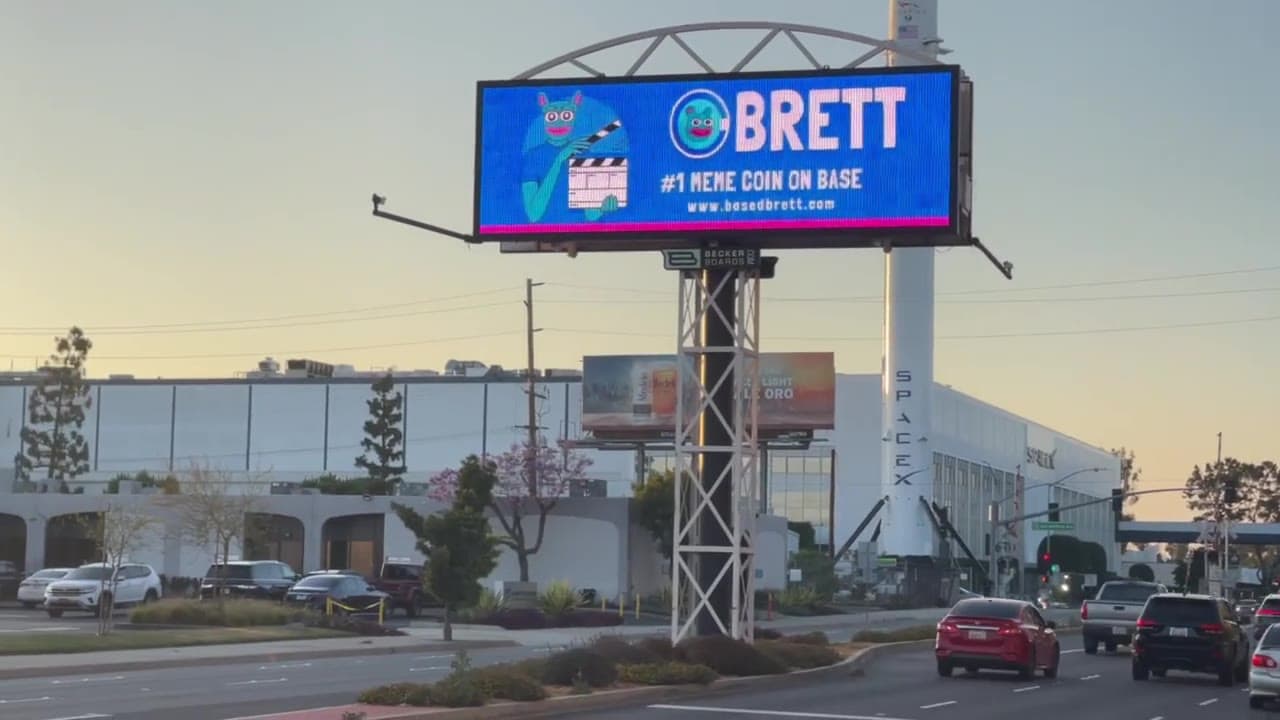
This is also where physical, verifiable placements earn their keep as proof rather than as decoration. EAC has run a Times Square billboard, a wrapped Lamborghini through Dubai, and aerial banner flights over Amsterdam, each one handed back as time-stamped footage a client can screenshot and put next to the press links. It's not a replacement for distribution, it's the other half of the same problem: getting a story in front of people who weren't already looking for it. The full set of placements is on the billboards showcase, and how it pairs with press and KOL work is covered on the services page.
What does crypto press actually cost?
Pricing varies a lot by outlet tier and package structure. As a rough shape of the market: basic tiers sit in the low hundreds, standard tiers move into the mid hundreds, and premium tiers with tier-one outlets or coordinated multi-site packages run higher, often quote-based once tier-one placements are involved. Anyone promising a fixed low price for guaranteed tier-one coverage is selling volume, not placement. Get a quote against your specific news and timeline rather than comparing sticker prices across services, since the outlet list behind the price is the part that actually matters.
How do you vet a distribution service before paying?
- Ask for the actual outlet list, not a category description like "300+ crypto sites."
- Ask whether placements are indexed and how long they stay up.
- Ask for a sample of a past release with the live links still working today, not at time of publication.
- Check whether "guaranteed tier-one" placements are real editorial coverage or paid syndication slots labeled as news.
If a provider can't answer those plainly, that's the answer.
Is press release distribution enough on its own?
For most launches, no. A release documents the news. It rarely drives its own traffic. Projects that want the release to actually get seen typically layer in KOL amplification on crypto Twitter, targeted Asia-market push through WeChat and Chinese KOLs if relevant, or a physical/visual placement that gives people something to screenshot and share. Distribution is the record. The rest of the campaign is what makes people find the record in the first place.
What is the difference between crypto press release distribution and crypto PR?
Distribution is the mechanical part: sending a written release to a network of outlets for pickup. PR is broader and includes pitching journalists directly, securing tier-one coverage, and shaping the story around a launch. A distribution package can be one tool inside a PR effort, but it isn't PR on its own.
How much does crypto press release distribution cost?
Basic tiers usually run in the low hundreds, standard tiers in the mid hundreds, and premium packages with tier-one outlets or coordinated multi-outlet coverage cost more and are typically quoted per project. Get pricing against your actual outlet list and timeline rather than comparing flat rates across providers.
Which outlets actually matter for a crypto press release?
Outlets with real editorial standards and readership matter more than raw count. A release that lands on a handful of outlets crypto readers and journalists actually check is worth more than one syndicated across hundreds of low-traffic aggregator sites. Ask any provider for the specific outlet list before paying.
Can a press release guarantee coverage in tier-one crypto outlets?
Genuine tier-one editorial placement is rarely something any service can flatly guarantee, since it depends on editorial review at the outlet. Packages that promise guaranteed tier-one coverage at a fixed low price are usually paid syndication slots labeled as news, not earned editorial coverage. Treat "guaranteed" tier-one claims with caution and ask what the guarantee actually covers.
Ready to put this into a campaign?
Explore the services, the billboards showcase, and the surfaces we operate across — then book on Telegram. Confidential. NDA available on request.