

Crypto press release services: what actually matters
Crypto press release services explained: how wire distribution differs from real tier-one placements, plus what to check before you pay.
- crypto press release services
- crypto pr
- press distribution
- tier-one placements
- web3 marketing
Quick answer Crypto press release services distribute a project announcement through wire networks and crypto-native outlets so it shows up as a live, linkable article on tier-one and industry press. Good services are tiered by outlet reach (basic wire pickup up to premium tier-one placement), quote real live URLs as proof, and are one part of a launch, not the whole plan. EAC runs tiered press distribution plus direct tier-one placements and hands back the live links, no fabricated pickup counts.
Every crypto founder eventually types "crypto press release services" into Google looking for the same thing: a way to get a launch, a listing, or a funding round in front of real outlets without hiring an in-house comms team. The category is crowded with wire resellers promising a fixed number of "pickups." Here is what actually matters when you're paying for it.
What does a crypto press release service actually do?
At the base level, it takes a written announcement (token launch, exchange listing, partnership, raise) and distributes it through a network of crypto and blockchain-focused outlets, plus a general wire feed that reaches mainstream aggregators. You write or commission the release, the service sends it out, and outlets that syndicate wire content publish it, usually within 24 to 72 hours.
The more useful services go beyond wire syndication. They have direct relationships with editors at named crypto outlets and can place a story as an actual editorial piece, not just a syndicated wire copy. That distinction matters a lot for credibility, and it's usually where the price jumps.
What's the difference between wire distribution and real placements?
Wire distribution is volume. You pay a flat fee, your release goes out to a list of outlets that have a syndication agreement with the wire, and some percentage of them run it automatically. It's fast and it's cheap, but a lot of what gets called "coverage" is a release sitting on a site's press-release subdomain, not on the main news feed.
Real placement is an editor at a named outlet deciding your story is worth running, sometimes rewritten in their own voice, sometimes as-is with a byline. This is harder to buy in bulk because it depends on relationships and whether the story is actually newsworthy. It's also the version that actually moves the needle with investors and exchanges doing due diligence, because they recognize the outlet.
EAC runs both lanes: tiered press-release distribution (Basic, Standard, Premium) for broad wire reach, plus a 17-outlet coordinated package and direct tier-one placements for projects that need editorial credibility, not just a pickup count. Every placement comes back as a live URL you can check yourself, detailed on the services page.
How much does crypto press release distribution cost?
Pricing in this space is almost always tiered by reach and outlet quality. Entry tiers run in the low hundreds of dollars for basic wire syndication across a fixed outlet list. Mid tiers add more outlets and faster turnaround. Top tiers add tier-one placement attempts and dedicated outreach to specific editors, and those are usually quote-based rather than a flat listed price, because the work (and the risk of it not landing) is different for every project.
Be wary of any service that guarantees a specific number of "guaranteed pickups" at a fixed low price. Pickups on unmoderated press-release subdomains are trivial to guarantee. Placement on an editorial front page is not, and no honest operator promises an exact count for that tier before seeing the story.
How do you know a press release service is legitimate?
- They show you live links, not screenshots. A real placement has a URL you can open right now. If a service only sends you a PDF report or a screenshot, ask why.
- They name the outlets up front. Vague language like "50+ premium outlets" without a list is a sign the list is mostly low-authority syndication sites.
- They separate wire syndication from tier-one placement in the pricing. If everything is one flat package, you have no way to know what you're actually paying for.
- They tell you what they can't guarantee. Editorial pickup at a named outlet depends on the story. Anyone who guarantees a specific tier-one outlet by name for a flat fee is either overselling or has a paid-placement arrangement they aren't disclosing.
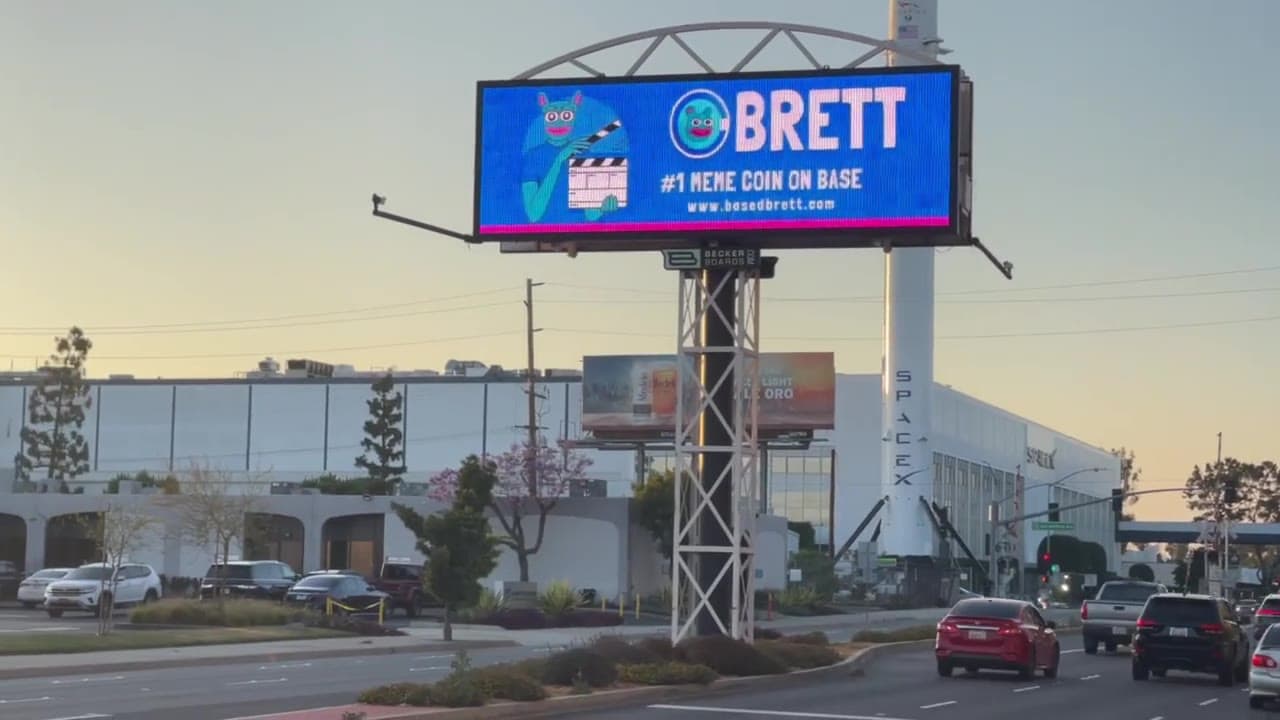
Proof matters more than promises here, and it's not limited to press. When EAC runs a launch that includes out-of-home, the same rule applies: a Times Square billboard slot or a Dubai Lambo wrap gets handed back as time-stamped footage, the same way a press placement gets handed back as a live URL. Founders can see the full range of what that looks like on the billboards showcase, and the full lineup of press, OOH, KOL, and Asia-market lanes is on the services page.
Should a press release be your only launch move?
No, and this is where most crypto marketing budgets get misallocated. A press release announces that something happened. It doesn't by itself build the audience that reads it, and it doesn't substitute for the community and trading-desk attention that actually drives volume around a launch or listing.
The releases that get real traction are almost always paired with something else running at the same time: KOL threads on crypto Twitter pointing at the story, a coordinated push into Asia-market channels if the project has exposure there, or a visible out-of-home moment that gives outlets something to photograph and reference. Press without an audience behind it reads like every other wire release that day. Press timed alongside KOL and community activity gets picked up and shared because there's already a conversation happening around it.
What should be in the actual release?
A few things separate a release that gets picked up from one that gets ignored:
- A real news hook. Editors and syndication algorithms both favor releases with a specific, dated event, a launch, a listing, a raise, a partnership, over generic "vision" statements.
- Named people and entities. Founder names, company names, exchange names. Vague releases with no attributable source read as spam to most crypto desks.
- No unverifiable claims. Outlets that care about their own credibility will reject or heavily edit a release full of projected numbers, "revolutionary" language, or guaranteed returns. Compliance-conscious wires will bounce it outright.
- A clear link back to the project, whether that's a site, an app, or a listing page, so the story actually converts attention into action.
Wire distribution vs. tier-one placement vs. coordinated packages
| Approach | What you get | Best for |
|---|---|---|
| Basic wire syndication | Broad, fast distribution to a fixed outlet list, mostly automated pickup | Routine announcements, SEO backlinks, baseline "we announced it" proof |
| Coordinated multi-outlet package | A story placed across a curated group of named crypto outlets around the same window | Launches and listings that need visible, simultaneous coverage |
| Tier-one editorial placement | A story run or written up by a specific named major outlet, quote-based | Raises, major partnerships, anything going in front of investors or exchanges doing diligence |
A press release proves something happened. It doesn't build the audience that has to care about it.
How does EAC handle crypto press?
EAC runs press as one lane inside a broader execution stack, not a standalone product resold from a vendor list. That means tiered distribution (Basic, Standard, Premium) for baseline reach, a 17-outlet coordinated package for launches that need simultaneous visibility, and direct tier-one outlet placements for stories that need real editorial weight. Every placement comes back as a live URL, and it can run alongside KOL activity, Asia-market push, or an out-of-home moment if the launch calls for it. Booking runs direct through Telegram with an operator who ships the campaign, not an account manager relaying a brief.
How much does a crypto press release cost?
Basic wire distribution typically runs in the low hundreds of dollars. Mid-tier packages with more outlets and faster turnaround cost more. Tier-one editorial placement and coordinated multi-outlet packages are usually quote-based because the effort depends on the story and the outlets targeted, ask for a quote rather than trusting a flat advertised number for guaranteed top-tier coverage.
What outlets pick up crypto press releases?
It depends on the tier. Basic wire syndication reaches a fixed list of crypto and blockchain sites with automated pickup agreements. Coordinated packages place the story across a curated group of named industry outlets. Tier-one placement means a specific major outlet running the story as editorial content, which is negotiated per project rather than guaranteed in bulk.
Do crypto press releases actually help with token launches?
They help most when paired with other activity, KOL coverage, community pushes, and visible campaign moments happening at the same time. A press release alone documents that a launch happened; it rarely generates attention on its own without an audience already primed to notice it.
How do I know if a press release service is inflating its pickup numbers?
Ask for the actual list of outlets and check whether the URLs land on a main news feed or an unmoderated press-release subdomain. Any service that won't name outlets up front, or that guarantees a fixed number of tier-one pickups at a flat low price, is very likely counting low-authority syndication as "coverage."
Ready to put this into a campaign?
Explore the services, the billboards showcase, and the surfaces we operate across — then book on Telegram. Confidential. NDA available on request.