

Times square crypto billboard: real cost and screen guide
What a times square crypto billboard actually costs, which screens to book, and how to pair it with press and KOL support for real reach.
- times square billboard
- crypto marketing
- out of home advertising
- kol marketing
- press coverage
Quick answer A Times Square crypto billboard runs roughly $2,750 per day for a standard digital placement, with premium multi-screen or high-traffic packages priced higher on request. EAC books and operates these placements directly, hands back time-stamped footage as proof, and can pair the billboard with press coverage or KOL support so the placement gets seen beyond the people walking through Duffy Square that day.
Every crypto project wants the same photo: their logo lit up over Times Square. Fewer projects understand what it actually takes to book one, what it costs, and what to do with the footage once it exists. This is the practical version.
What does a Times Square crypto billboard actually cost?
Pricing depends on screen, duration, and rotation frequency. A standard digital billboard placement in Times Square runs around $2,750 per day through EAC. Larger format buys, the six-story Duffy Square screens, or NFT.NYC-week placements with heavy foot traffic command more, and those are quoted per project rather than listed as a flat rate. Anyone quoting a single number for "a Times Square billboard" without asking about screen size, loop length, and dates is guessing.
Rates also move with demand. Weeks tied to major conferences, holidays, or high foot-traffic events cost more than a quiet Tuesday in February. If budget is fixed, book early and be flexible on exact dates.
Which screen should a crypto project actually book?
Times Square has dozens of digital displays, not one. The differences that matter for a crypto campaign:
- Screen size and position: a placement facing the main pedestrian flow through Duffy Square gets seen by far more people than a side-facing panel a block away.
- Loop length: shorter loops mean your creative repeats more often per hour. A crowded loop with twenty other advertisers dilutes the spot.
- Static vs. video: video creative with motion holds attention longer on a screen surrounded by other moving ads.
- Day parting: evening hours have denser foot traffic than early morning, which affects how many people actually see the loop.
A project buying blind off a price list usually ends up on a cheap, low-visibility panel and wonders why the "Times Square billboard" didn't do much. The screen matters more than the zip code.
Is a Times Square billboard worth it for a crypto project?
It depends on what the billboard is for. As a standalone ad buy hoping for direct signups, a single-day billboard is expensive per conversion and hard to track. As a credibility asset, it works differently: the footage becomes something a project can post, screenshot, and reference in decks, tweets, and press outreach for months afterward. "We're live in Times Square" is a claim that's easy to make and easy to fake with a mockup. Real footage with a timestamp is the difference.
The projects that get the most out of it treat the billboard as one piece of a stack, not the whole campaign. Pair the placement with press coverage that references it, KOL posts that show the footage, or a QR code on the billboard itself that ties directly to a mint or launch page. The billboard creates the visual, the rest of the stack gives people a reason to act on it.
Gets you footage and a screenshot. Good for credibility and social proof. Limited direct traffic without a clear next step for viewers.
Footage becomes the anchor for a press story and KOL posts, extending reach past foot traffic and into timelines and search.
How does booking actually work?
Most agencies selling "Times Square billboards" are reselling inventory from a media owner and adding a markup you can't see. EAC operates its out-of-home placements directly, which is why pricing can be public and specific instead of "call for a quote." Booking runs through Telegram, direct to the person who schedules the screen, not a rep who forwards the request to someone else.
The practical steps: confirm dates and screen, send creative (or have it built), get the placement scheduled, and receive time-stamped footage once it runs. No deck, no discovery call chain. A full rundown of screen options and current placements is on the billboards page.
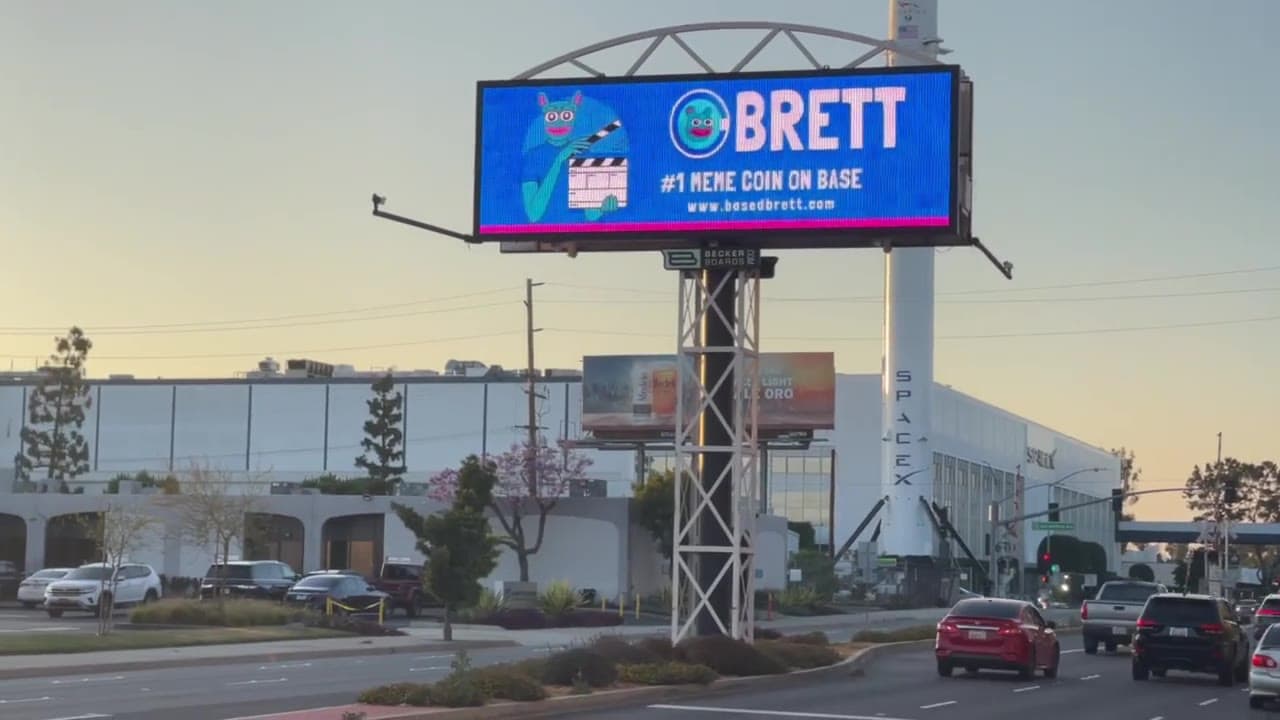
Proof matters more than the pitch here. EAC has run Times Square billboard placements, a wrapped Lamborghini in Dubai, and aerial banner flights over Amsterdam, and every one of them is handed back as footage a project can screenshot and verify, not a promise on a slide. If a placement can't be checked, it isn't worth buying. See the current run of billboard and OOH placements or the full services list for how these pair with press and KOL work.
What creative actually works on a Times Square screen?
Times Square is a crowded visual field, dozens of advertisers competing for a two-second glance. Creative that works there:
- Bold, simple type readable from across the street, not a dense logo lockup.
- High contrast color against the surrounding ads, most of which lean toward blue and white corporate palettes.
- A short, legible message, not a full value proposition. "Live now" and a ticker or QR code beats a paragraph.
- Motion if the screen supports video: static images get lost faster in a field of moving screens.
If a project doesn't have creative ready, that's a solvable problem, not a reason to delay the booking. Creative and identity work can happen in parallel with scheduling the screen.
How should a project use the footage afterward?
The billboard moment is short. What a project does with the recording afterward often matters more than the placement itself. Common uses: a pinned tweet with the raw clip, a press release that references the placement with the footage attached, a KOL thread built around the visual, or a section of the deck for investor conversations. Timestamped footage is verifiable in a way a mockup never is, and skeptical crypto audiences increasingly ask for the receipts before believing the claim.
Projects running a launch week sometimes stack the billboard with a coordinated press push and CT KOL posts so the "we're in Times Square" moment lands across multiple surfaces the same day instead of fading after a few hours of foot traffic.
What are the common mistakes projects make booking one?
- Booking the cheapest available screen without checking loop length or foot-traffic position.
- Treating the billboard as the entire campaign instead of one visual proof point in a larger push.
- Sending creative built for a phone screen or a webpage, not a six-story display seen from across a street.
- Skipping the footage capture, then having no way to prove the placement happened after the fact.
- Going through a reseller layer that adds cost and slows down scheduling.
How much does a Times Square crypto billboard cost?
A standard digital billboard placement runs around $2,750 per day. Larger screens, multi-day runs, or high-traffic event weeks cost more and are quoted based on specific dates and screen choice.
Can any crypto project book a Times Square billboard?
Yes. There's no gatekeeping around token type or project stage, though most media owners and operators require standard ad content review. Booking is scheduling and payment, not an approval committee.
How long does it take to book a Times Square billboard?
Turnaround depends on screen availability. A standard slot can often be scheduled within days; premium screens or specific high-traffic dates (conference weeks, holidays) need more lead time.
Do I get proof the billboard actually ran?
Yes. EAC hands back time-stamped footage of the placement running, which is the difference between a claim and something you can post and verify. That footage is also what makes the placement useful for press and social afterward.
Ready to put this into a campaign?
Explore the services, the billboards showcase, and the surfaces we operate across — then book on Telegram. Confidential. NDA available on request.