

Top crypto PR agencies: how to spot a real one
How to evaluate top crypto PR agencies, tell operators from resellers, and get live placements instead of vague exposure packages.
- crypto pr
- crypto pr agencies
- media placements
- web3 marketing
- press coverage
Quick answer There's no single "best" crypto PR agency, the right pick depends on whether you need tier-one press placements, high-volume distribution, Asia-market reach, or proof you can show a community fast. Look for agencies that hand back live URLs instead of screenshots of a media list, that operate placements directly rather than reselling a vendor, and that quote real deliverables instead of vague "exposure" packages.
Every list of top crypto PR agencies reads the same: a ranked table, a paragraph of adjectives, no way to check any of it. Founders searching this term usually already got burned once, either by an agency that promised tier-one coverage and delivered a paid content-marketing tag, or by a distribution service that "reached 200 outlets" with none of them being outlets a journalist or investor would recognize. This piece is about what actually separates agencies worth paying from agencies renting a media list.
What does a crypto PR agency actually do?
A crypto PR agency places your project in front of the press, either through earned coverage (a journalist writes about you because the story is real) or paid distribution (a press release goes out through a wire and lands on outlet sites that accept syndicated content). Good agencies are honest about which one you're buying. A launch announcement, a funding round, a partnership, a protocol upgrade: each of these is a different pitch, and a competent agency writes the release to fit the news, not to fit a template.
The deliverable should always be a live link. Not a PDF report, not a screenshot, not a promise of "impressions." If an agency can't hand you a URL you can click right now, you didn't get press, you got a line item.
How do you tell a real agency from a reseller?
Most of the names on generic "top agency" lists are resellers: they take your budget, forward it to a distribution wire or a freelance journalist network, and mark it up. That's not automatically bad, but it means you're paying for a middleman with no control over placement quality or timing. Ask directly:
- Do you run the placements yourselves, or send my brief to a third party?
- Can I see live examples from the last 30 days, not a case study from 2022?
- What's the actual outlet list for this package, by name, not by tier label?
- What happens if an outlet doesn't run the piece, do I get a substitute or a refund?
Agencies that operate placements directly (rather than reselling a vendor list) will answer all four without hedging. EAC's crypto PR and press lane works this way: tiered release distribution (Basic, Standard, Premium), a coordinated 17-outlet article package, and tier-one placements, with every single one returned as a live URL, not a promise.
What should a crypto PR package actually include?
Pricing in this industry is almost never public because scope varies so much project to project, but the structure of a good package is consistent:
| Package type | What it's for | What to check |
|---|---|---|
| Basic wire distribution | Getting a release indexed and syndicated fast, cheap volume | Real outlet list, not just "500+ sites" |
| Standard / mid-tier package | A mix of syndicated and semi-editorial placements | Are any outlets crypto-specific and read by your actual audience? |
| Premium / tier-one placement | Named outlets that carry real weight with investors and press | Confirmed placement, not "pitch attempt," before you pay |
| Coordinated multi-outlet package | Same story landing across many sites in a short window, for launch-day density | Timing coordination, and whether outlets overlap in readership |
Quote-based pricing is normal here, and any agency giving you a hard number before hearing your announcement and timeline is guessing. What shouldn't be quote-based is transparency about what's included.
Should PR be your only spend, or part of a wider push?
Press alone rarely moves a launch. It works best stacked with visible proof a community can screenshot and share, and with reach in the specific markets your token or protocol is targeting.
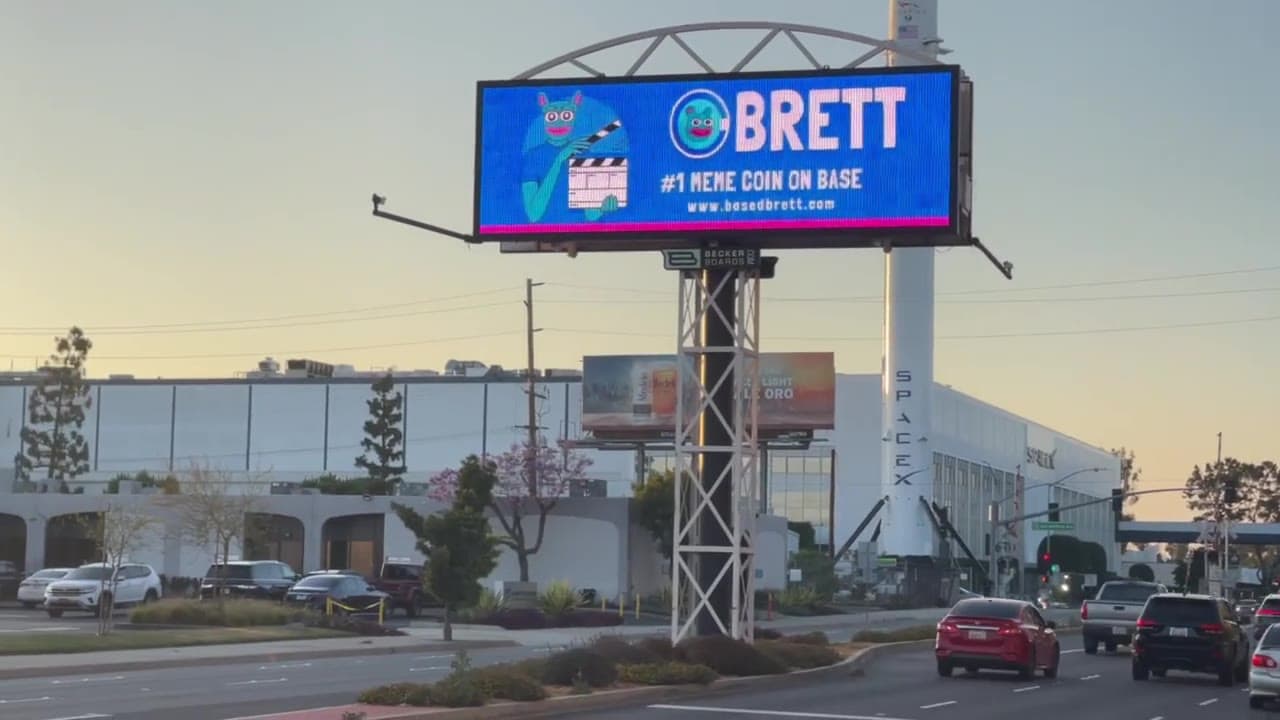
A journalist has 50 press releases in their inbox from the same week your launch goes out. A billboard in Times Square doesn't have that competition, and neither does a CT KOL your target community already follows.
This is the practical reason agencies that run press, out-of-home, KOL campaigns, and Asia-market marketing under one roof tend to produce a tighter launch than a press-only shop: the press gives you the link to cite, the KOL push gets it in front of the audience that acts on it, and physical placements give the community something to screenshot beyond a headline.
Proof matters more than volume. EAC has run Times Square billboard placements, a wrapped Lamborghini campaign in Dubai, and aerial banner flights over metros like Amsterdam, every one handed back as time-stamped footage the client can verify and post. That's the same standard applied to press: if it can't be linked or filmed, it doesn't count as a deliverable.
What about Asia-market and Chinese PR reach specifically?
A lot of "top crypto PR agency" lists skip this entirely, which is a gap if your token has any exposure to Chinese-speaking communities or exchanges. Real reach here means native banners (CnToken, HKDefi), Chinese CT KOLs, WeChat group pushes, Little Red Book (Xiaohongshu) creators, and native-language moderation, not a translated press release nobody in that market actually reads. If an agency's "Asia strategy" is a Google-translated release and a WeChat QR code screenshot, that's not distribution, that's decoration.
Red flags when comparing crypto PR agencies
- Guaranteed coverage in named tier-one outlets. No agency controls editorial acceptance completely. Anyone promising a guaranteed CoinDesk or Bloomberg placement is either overselling or routing you through paid content that reads as sponsored, not editorial.
- Vague "impressions" numbers with no source. A number with no methodology attached is marketing, not a metric.
- No live links, ever. If the case studies are screenshots of a dashboard instead of clickable URLs, ask why.
- One-size template releases. A funding announcement and a mainnet launch need different framing. If every release you're shown reads the same, the agency isn't writing to the story.
- Retainers with no defined deliverable. If the contract says "ongoing PR support" with no named placements or packages attached, you're paying for a Slack channel.
How to actually shortlist an agency this week
- Ask for three live links from the last 60 days, click all of them.
- Ask whether the agency operates the placement or resells it, and get a straight answer.
- Get a written scope: named outlets, timeline, what happens if a placement falls through.
- Check if they cover the markets you actually need, Asia-specific reach is not universal across agencies.
- Confirm the booking process is direct. EAC runs booking through Telegram, straight to the person shipping the campaign, no account manager relay.
Most of what's marketed as a "top agencies" ranking is really a list of who bought a listicle placement. Judge on receipts: live URLs, named outlets, footage you can screenshot. That standard applies whether you're comparing press packages or comparing a billboard placement against a KOL campaign.
How much does crypto PR cost?
Pricing is quote-based because scope varies with outlet tier, release volume, and timeline. Basic wire distribution is the cheapest entry point, tier-one placements and coordinated multi-outlet packages cost more. Any agency should be able to break down the package before you commit, even if the number itself isn't posted publicly.
What's the difference between a press release and real media coverage?
A press release is content you write and pay to distribute, it runs largely as submitted. Media coverage is a journalist choosing to write about your project independently, which can't be bought outright, only earned through a story worth covering. Reputable agencies are clear about which one a package delivers.
Do I need a crypto-specific PR agency, or can a general PR firm do this?
Crypto has its own outlet ecosystem, its own regulatory sensitivities around token language, and its own audience behavior. A general PR firm without crypto relationships or crypto-specific compliance knowledge usually can't get real placements in the outlets your community and investors actually read.
Can a crypto PR agency guarantee coverage in outlets like CoinDesk or The Block?
No legitimate agency guarantees editorial acceptance at a named tier-one outlet, since that decision sits with the outlet's editors, not the agency. What an agency can guarantee is a pitch attempt, a confirmed placement once secured, and a live link as proof. Be wary of anyone promising a specific outlet upfront.
Ready to put this into a campaign?
Explore the services, the billboards showcase, and the surfaces we operate across — then book on Telegram. Confidential. NDA available on request.