

Web3 marketing agency for token launch: what to look for
How a web3 marketing agency for token launch runs press, KOL, OOH, and Asia channels directly with proof of every placement.
- token launch
- web3 marketing agency
- kol marketing
- crypto pr
- tge
Quick answer A web3 marketing agency for a token launch should run press, KOL, out-of-home, and Asia-market channels directly, not through a stack of subcontractors, and hand back proof of every placement (live URLs, footage) instead of a report. Look for a team that operates its own surfaces, quotes real placements at real prices, and can move fast on Telegram instead of a weeks-long onboarding process.
A token launch has one shot at a launch window. The marketing has to be live before the listing, not two weeks after, and it has to be visible in places a buyer actually checks: press outlets, crypto Twitter, and increasingly Asia-side channels where a lot of early volume comes from.
What does a web3 marketing agency actually do for a token launch?
Strip away the deck language and the job is simple: get the token in front of people who trade before the TGE, and leave proof behind that a buyer can verify. That breaks into a few real workstreams.
- Press: tiered release distribution, coordinated multi-outlet packages, and placement in tier-one crypto outlets, each returned as a live link.
- KOL and influencer: crypto-Twitter accounts matched to the project's niche, not a spray-and-pray list.
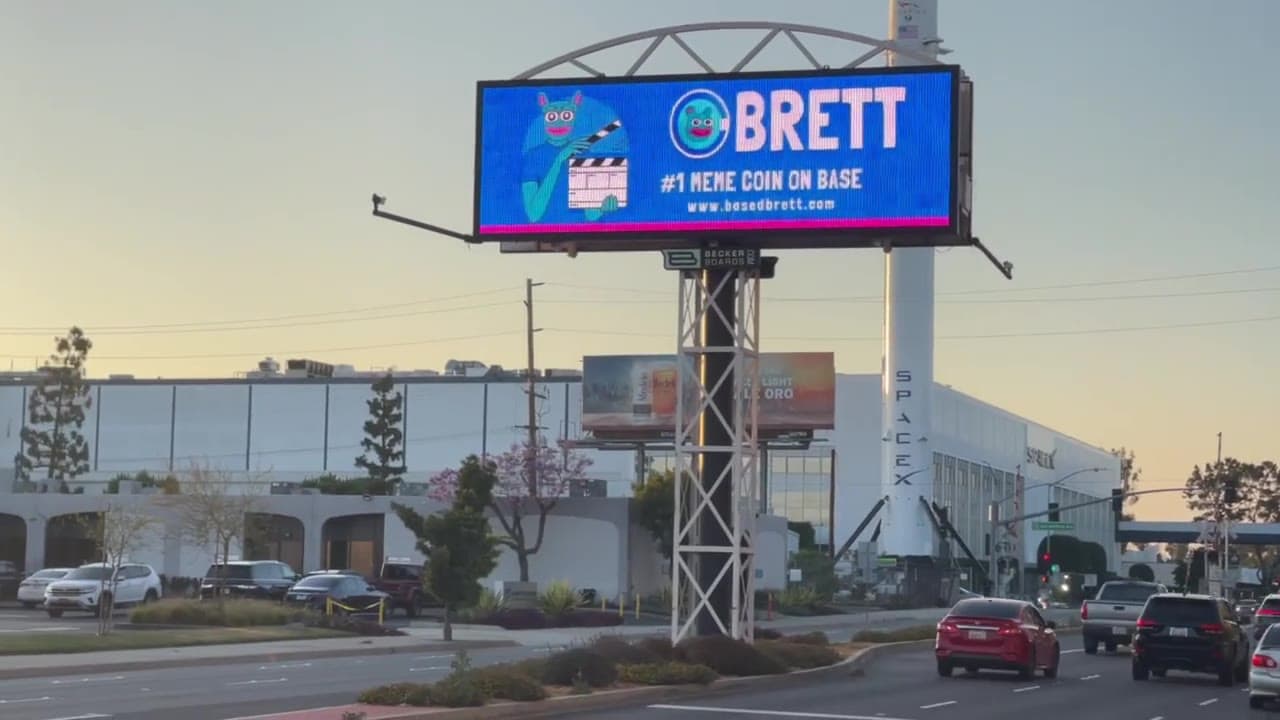
- Out-of-home: billboards, LED trucks, aerial banners, and activations that put the token in the physical world, not just a feed.
- Asia and Chinese-market reach: CnToken and HKDefi banner placements, Chinese CT KOLs, WeChat group pushes, Little Red Book (Xiaohongshu) KOLs, and native moderation, since a launch that skips Asia is leaving volume on the table.
EAC runs all four lanes directly. The full breakdown of what each lane includes is on the crypto marketing services page.
Why does timing matter more for a token launch than other crypto marketing?
A listing announcement, an airdrop deadline, a TGE date: these are fixed points. Press that lands after the news cycle has moved on is wasted spend. KOL posts that go live after the pump has already happened do nothing for entry volume. An agency that needs a week of "strategy alignment" before it ships anything is structurally the wrong fit for a launch timeline. The team booking placements needs to be the team executing them, so a founder can say "we need press live by Thursday" and get a straight answer instead of a forwarded email chain.
How much does token launch marketing cost?
Press and KOL campaigns are quote-based, since scope varies by outlet tier and audience size, but the physical placements have public numbers a founder can plan a budget around:
- Times Square billboard: around $2,750/day
- Dubai Lambo wrap: around $3,500
- Aerial banner flight (3-hour flight, Amsterdam and other metros): around $3,500
Press tiers (Basic/Standard/Premium) and KOL packages are quoted against the specific launch, since a 17-outlet press package or a Chinese KOL push has to be matched to the project's actual budget and timeline. The move is to bring the launch date and target markets to the conversation and get a real number back, not a rate card.
Subcontracts placements, adds a markup, and reports back on a schedule. Proof is a screenshot from a third party.
Operates press, KOL, OOH, and Asia-market channels directly. Every placement comes back as a time-stamped clip or a live URL.
What proof should a token project ask for before paying?
Ask for receipts, not promises. A billboard placement should come back as time-stamped footage the project can screenshot and post. A press placement should come back as a live URL, not a PDF proof sheet. A KOL post should be checkable on-chain and on-platform. If an agency can't produce that after the fact, it likely didn't run the placement itself.
EAC's own placements are the proof of what "execution" looks like in this space: a Times Square billboard run, a wrapped Lamborghini in Dubai, aerial banner flights over Amsterdam, and tier-one press with links that still resolve months later. None of that is a case study pulled from a slide, it's placements a project can go verify right now on the billboards showcase, alongside the rest of what's covered on the services page.
Should a token launch prioritize press, KOLs, or out-of-home?
It depends on where the buyers are. A project targeting Western crypto-Twitter needs KOL coverage and press first, since that's where discovery happens before a listing. A project with a strong visual identity or a community that screenshots everything benefits from a billboard or an aerial banner, since that footage circulates on its own once it's posted. A project expecting meaningful Asia-side volume needs Chinese KOLs and banner placements running in parallel with the Western push, not after it. Most launches that go well use two or three of these lanes together rather than betting everything on one channel.
The launch window doesn't wait for a strategy deck. The channels that ship inside that window are the ones that matter.
How does booking actually work?
No onboarding call chain, no retainer negotiation stretched over weeks. Booking runs through Telegram, direct to an operator who can quote the press tier, KOL package, or OOH placement and confirm a date. For a launch on a fixed timeline, that speed is the difference between marketing that lands and marketing that arrives after the news cycle has already moved on.
How far in advance should I book marketing for a token launch?
Two to four weeks out is workable for most press and KOL campaigns. Out-of-home placements like billboards or aerial banners should be locked as soon as the launch date is fixed, since specific dates and locations can book out. Asia-market pushes (WeChat, Little Red Book) benefit from lead time too, since native moderation and KOL scheduling take coordination.
Do I need a Chinese marketing push for a global token launch?
Not every launch needs it, but any project expecting meaningful Asia-side volume should plan for it rather than bolt it on later. Chinese CT KOLs, WeChat group pushes, and Little Red Book placements reach an audience that Western press and Twitter KOLs simply don't touch.
Can a small project afford billboard or OOH marketing for a launch?
Public pricing on placements like a Times Square billboard (around $2,750/day) or an aerial banner flight (around $3,500) makes single-day or single-flight activations workable for projects that aren't running a massive budget. The value is in the footage it produces, which gets reused across social and press long after the placement itself ends.
What's the difference between a press release and tier-one press placement?
A press release is distributed through a wire and picked up mechanically by outlets that syndicate wire content. Tier-one placement means the story runs as an actual article on a specific outlet's site with a live, checkable URL. Both have a place in a launch campaign, but they're not the same product and shouldn't be quoted the same way.
Ready to put this into a campaign?
Explore the services, the billboards showcase, and the surfaces we operate across — then book on Telegram. Confidential. NDA available on request.